Journey times
Glasgow Queen Street–Fort William averages 3h 53m (fastest about 3h 42m); Glasgow–Mallaig about 5h 18–30m; Glasgow–Oban around 3h; direct Edinburgh–Fort William about 4h 58m–5h.
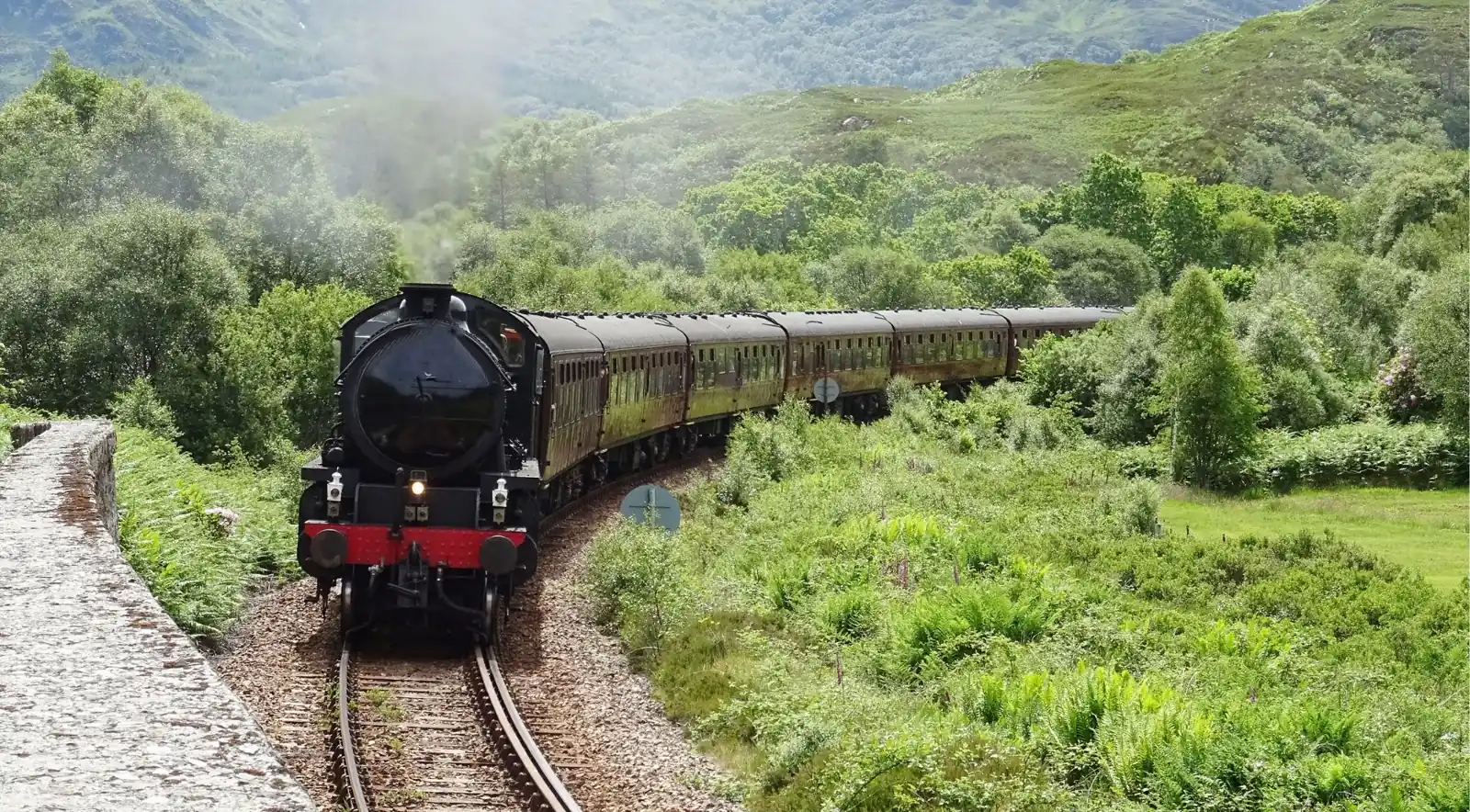
The West Highland Line is a year-round ScotRail diesel railway running from Glasgow Queen Street to Fort William and Mallaig, with a branch to Oban — voted the top rail journey in the world by readers of Wanderlust magazine in 2009, and the line on which the famous Jacobite steam train runs its Fort William–Mallaig section.
In 2026 you can travel the whole line from about £25–46 one-way with ScotRail (Glasgow–Fort William around 3h 53m; Glasgow–Mallaig about 5h 18–30m; Glasgow–Oban around 3h), while the seasonal Jacobite steam service (1 June–23 October 2026) costs £76 standard or £116 first class return and sells out fast.
The one distinction most visitors get wrong: the Jacobite is not the same as the West Highland Line. It's a seasonal steam highlight running over the line's most scenic stretch — Fort William to Mallaig — while the West Highland Line is the everyday railway that carries you there all year round.
Want the full steam-train picture? See our complete 2026 Jacobite guide, our Glenfinnan Viaduct guide, and how to reach it from Edinburgh. For the specific Fort William–Mallaig leg in detail, read our Fort William to Mallaig route guide.
Live dates and prices for the featured Glasgow day tour covering the line's most scenic stretch.
The West Highland Line links Glasgow in central Scotland with the west-coast ports of Oban and Mallaig, threading through the southern and western Highlands. It is the westernmost railway in Great Britain and is widely described as Britain's — and one of the world's — most scenic railways. Its Gaelic name is Rathad Iarainn nan Eilean, "the Iron Road to the Isles."
The original West Highland Railway ran from Craigendoran, near Helensburgh, to Fort William, opening on 11 August 1894. The Mallaig Extension Railway, engineered through extraordinarily difficult terrain by Robert McAlpine & Sons — "Concrete Bob," who pioneered mass concrete on the Glenfinnan Viaduct — opened on 1 April 1901, giving fishing communities a vital rail link to markets such as Billingsgate in London. The Oban branch was originally part of the Callander & Oban Railway; after the Callander–Crianlarich section closed in 1965 following a landslide in Glen Ogle, Oban trains were rerouted via the West Highland Line and the 1897 connecting spur at Crianlarich.
The full route from Glasgow Queen Street is roughly 123 miles to Fort William and around 164 miles to Mallaig; the Oban branch is about 101 miles. Much of the line is single track through remote country, signalled by Radio Electronic Token Block controlled from Banavie. Passenger services run year-round with ScotRail, while the Caledonian Sleeper runs the Fort William portion overnight to and from London Euston.
Riding Glasgow to Fort William, Mallaig or Oban? These top-rated tours and tickets across Glasgow, Edinburgh, Glencoe, the Isle of Skye and Loch Ness are popular add-ons for travellers exploring the West Highland Line.
From Glasgow Queen Street, the line runs northwest through Helensburgh and Loch Lomond to a junction at Crianlarich, where it splits for Oban or continues to Fort William and Mallaig.
The journey begins at Glasgow's smaller mainline terminus, running along the north bank of the Clyde through Dalmuir and Dumbarton before reaching Helensburgh Upper — home to Charles Rennie Mackintosh's Hill House, and where the line "begins proper" after branching at Craigendoran Junction.
High-level views over the Gare Loch and the Faslane naval base, then the jagged three-peaked summit of The Cobbler as the train runs between Loch Long and Loch Lomond, with a Loch Lomond cruise possible from Arrochar & Tarbet (March–November).
The pivotal junction where the train divides: typically two carriages continue north to Fort William, two head west to Oban. Up to 15 minutes are allowed for the split, giving time for the famous station tea room.
Tyndrum is the smallest place in Britain with two railway stations. North of it the line famously loops around the base of Beinn Dòrain on the celebrated "Horseshoe Curve" — the builders lacked funds for a viaduct, so the railway circles the glen instead.
One of Europe's largest wildernesses — the tracks were "floated" across the peat bog on a mattress of tree roots and brushwood. Corrour, the highest mainline station in the UK at 1,340 ft (410 m), has no public road access and featured in the 1996 film Trainspotting.
The line descends past Loch Treig and through the narrow Monessie Gorge, calling at Tulloch, Roy Bridge and Spean Bridge before reaching Fort William — the largest town in the West Highlands, at the foot of Ben Nevis. As a terminus, trains reverse here, so switch sides for the best views if continuing to Mallaig.
Many travellers' favourite stretch: the Caledonian Canal at Banavie (with Neptune's Staircase alongside), Loch Eil at Corpach, the dramatic Glenfinnan Viaduct and Monument, then Lochailort, Arisaig — the most westerly mainline station in Britain — and the silver sands of Morar, before journey's end at the fishing port of Mallaig.
From Crianlarich, Oban trains head west past the ruined Kilchurn Castle and through the dramatic Pass of Brander beneath Ben Cruachan — every bit as scenic as the Fort William line, and about 3 hours from Glasgow.
If you'd rather see the West Highland scenery around Loch Awe, Kilchurn Castle and Oban without working around a train timetable, this small-group tour covers the same dramatic country as the Oban branch by road, with a stop for lunch in Oban — Scotland's self-styled "seafood capital" and the main ferry gateway to the Hebrides.
Trains continue through Taynuilt and Connel Ferry, with views of the Connel Bridge, before reaching Oban — Mull, Iona, Coll and Barra ferries all depart from here.
Check current pricing and availability:
Check Availability & PricesFree cancellation up to 24 hours before the tour.
To be crystal clear: they share the same tracks on the Fort William–Mallaig stretch, but they are different services run by different operators.
The Jacobite is operated by West Coast Railways and hauled by a Stanier "Black Five" steam locomotive — famous worldwide as the "Hogwarts Express" from the Harry Potter films. 2026 note: the season started later than usual (1 June) after a Central Door Locking dispute, and the train has been running mixed carriage stock. Full details, timetables and 2026 fares are in our complete Jacobite guide.
If you'd rather sit back than plan connections and platform changes at Crianlarich, a guided day tour covers the same Highland scenery from Glasgow, with commentary and stops built in.
This coach tour follows the West Highland Line's most dramatic stretch by road — Rannoch Moor and Glencoe, free time in Fort William, and the Glenfinnan Viaduct viewpoint over Loch Shiel — without you needing to plan a single connection.
Prefer to ride the actual steam train across the viaduct? See our featured Jacobite tour from Edinburgh, which includes a scenic leg on board.
See live dates and prices above, or check availability directly:
Check Availability & PricesFree cancellation up to 24 hours before the tour.
What to know before you book — journey times, frequency, rail passes and the best side of the train.
Glasgow Queen Street–Fort William averages 3h 53m (fastest about 3h 42m); Glasgow–Mallaig about 5h 18–30m; Glasgow–Oban around 3h; direct Edinburgh–Fort William about 4h 58m–5h.
Up to 4 trains a day Glasgow–Fort William, up to 3 a day Glasgow–Mallaig, up to 6 a day Glasgow–Oban, fewer on Sundays. First Glasgow–Fort William departure around 05:48; last around 18:24.
No booking fees with ScotRail. Glasgow–Fort William from about £38.80 return / £30 one-way advance; Glasgow–Mallaig from about £34.30 one-way advance; Glasgow–Oban from about £25.40 one-way advance. Peak fares were removed in September 2025.
scotrail.co.uk or the ScotRail app, with live times and mTickets. Advance tickets usually appear up to 12 weeks ahead — book early for the lowest fares.
The Spirit of Scotland Travelpass gives 4 days' travel in 8 for about £155, or 8 in 15 for £196, covering trains, many buses, Edinburgh Trams and the Glasgow Subway. The Highland Rover gives 4 days in 8 for about £99 across the Highlands.
ScotRail runs dedicated Highland Explorer active-travel carriages on this line with 20 cycle spaces and extra luggage room. Cycle reservations are required and free.
The line is worth riding for its own sake — but these stops reward getting off along the way.
The West Highland Way long-distance path parallels the railway through this stretch — walk a section and catch the train back.
Munro-bagging (Beinn na Lap, Leum Uilleim), Loch Ossian, and a meal at the Corrour Station House — Britain's most remote restaurant, open mid-March to end October.
Climb Ben Nevis, explore the West Highland Museum, and use the town as the base for the Jacobite steam train.
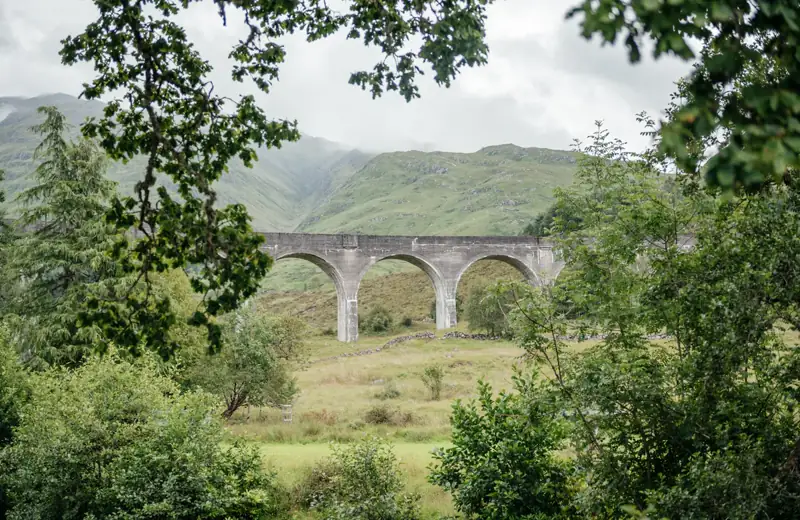
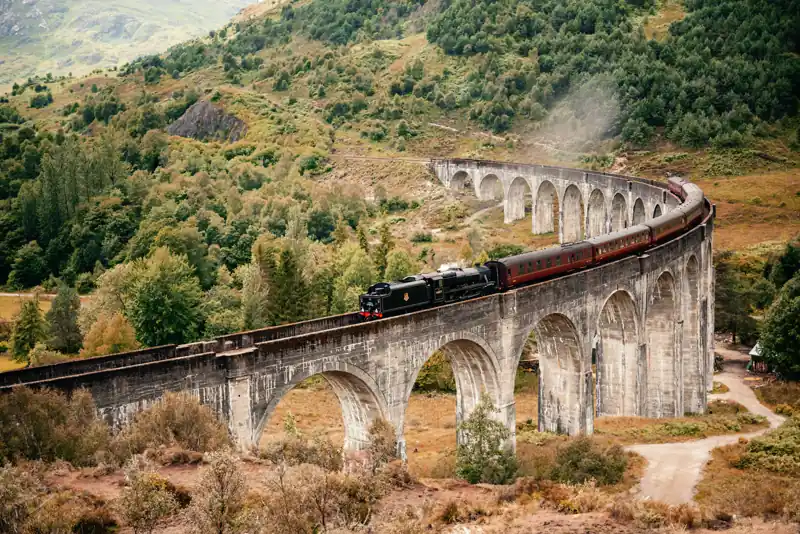
The viaduct viewpoint, the Glenfinnan Monument, the station museum and Loch Shiel cruises — read our full Glenfinnan Viaduct guide for viewpoints and crossing times.
Fresh seafood, the Heritage Centre, and ferries to Skye and the Small Isles — see our Fort William to Mallaig route guide for the full leg.
Oban Distillery (1794), McCaig's Tower, and ferries to Mull, Iona and beyond — the reward at the end of the Oban branch.
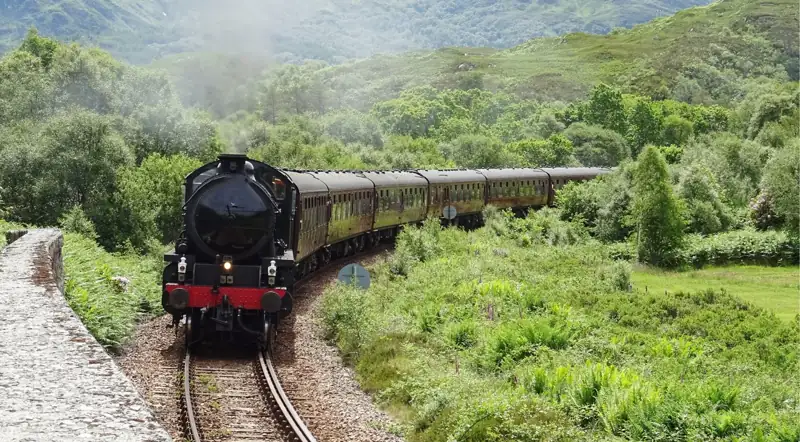
Scroll or drag to browse the route, the viaduct and the steam highlight.
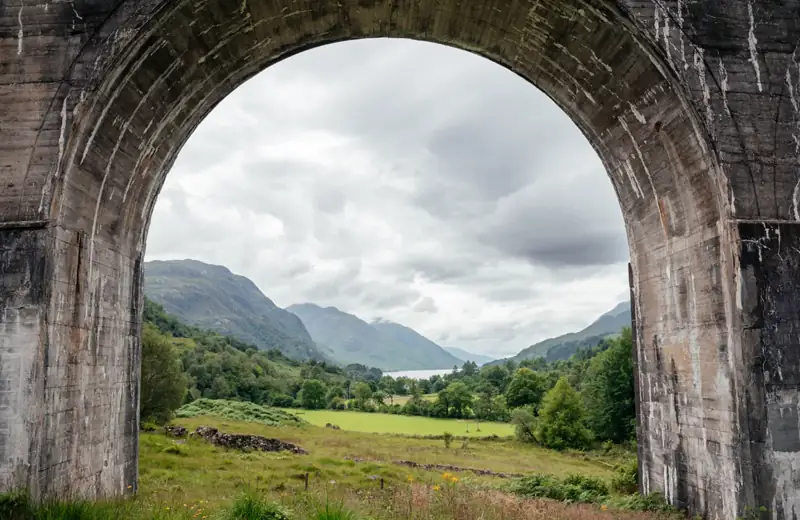
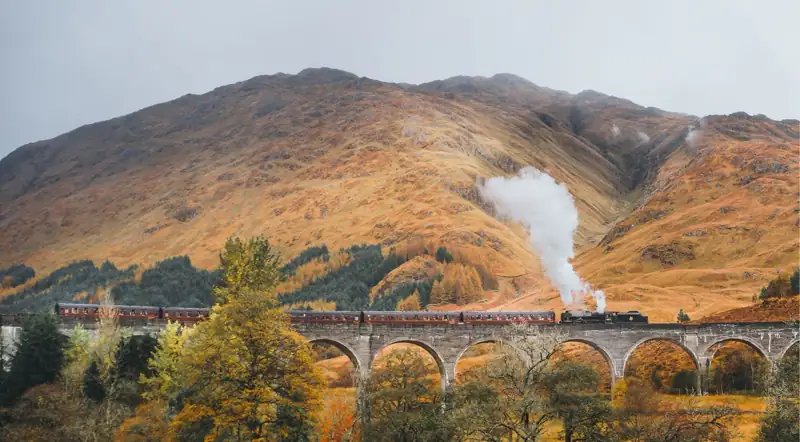
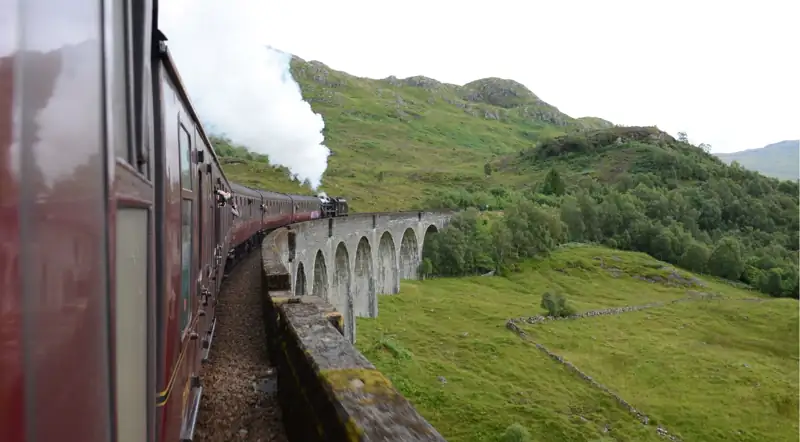
What to do depending on how much time you have.
Take the ScotRail service Glasgow–Mallaig (or Glasgow–Fort William if pressed for time), sitting on the left northbound. Book advance tickets on scotrail.co.uk for the lowest fares.
Combine ScotRail to Fort William with a pre-booked Jacobite return to Mallaig — book the Jacobite the moment your dates are set, as it sells out. If it's sold out, the Glenfinnan Viaduct viewpoint is a free alternative for watching the train cross.
Buy a Spirit of Scotland Travelpass to hop on and off at Arrochar, Corrour, Glenfinnan and Oban, walking sections of the West Highland Way between stops.
If the Jacobite is sold out or running on diesel substitution, prioritise the year-round ScotRail service plus the Glenfinnan viewpoint. Travelling in winter, build in buffer time for weather delays and check ScotRail live times before departing.
The questions travellers ask most, answered with current 2026 detail.
No. The West Highland Line is the year-round ScotRail diesel railway between Glasgow, Fort William, Mallaig and Oban. The Jacobite is a seasonal steam service that runs over the line's most scenic section, Fort William to Mallaig, from 1 June to 23 October 2026. See our complete 2026 Jacobite guide for the full picture.
About 123 miles (198 km) Glasgow to Fort William, around 164 miles (264 km) on to Mallaig, and roughly 101 miles on the Oban branch.
ScotRail advance fares start around £25 to £46 one-way depending on destination. The Jacobite steam train costs £76 standard or £116 first class return in 2026, plus a booking fee.
From Glasgow Queen Street to Fort William and Mallaig, with a branch splitting at Crianlarich to Oban.
Yes — Glasgow to Oban and back, or Glasgow to Fort William and back, are comfortable day trips. Glasgow to Mallaig and back in a single day is possible but long, at around 5 hours or more each way.
Corrour, on the West Highland Line, at 1,340 feet (410 m) above sea level. It has no public road access.
Yes — it was voted the top rail journey in the world by Wanderlust magazine readers in 2009, ahead of the Trans-Siberian and the Cuzco–Machu Picchu lines, and is repeatedly named among the most scenic railways anywhere.
Via scotrail.co.uk or the ScotRail app for the year-round service. The Jacobite steam highlight is booked separately at westcoastrailways.co.uk.
Left travelling north or west (Glasgow to Fort William or Mallaig); right travelling south. On the Fort William–Mallaig leg, the left side again has the best views, including the curve onto the Glenfinnan Viaduct — but remember the train reverses at Fort William, so switch sides there.
Not directly — it ends at Mallaig, from where CalMac ferries cross to Armadale on the Isle of Skye in about 30 minutes.
Yes — the Spirit of Scotland Travelpass (4 days' travel in 8 for about £155, or 8 in 15 for £196) covers the whole line, plus many buses, Edinburgh Trams and the Glasgow Subway. The Highland Rover gives 4 days in 8 for about £99 across the Highlands, including Fort William and Oban. Rail passes cover ScotRail only — the seasonal Jacobite steam train must be booked and paid for separately.